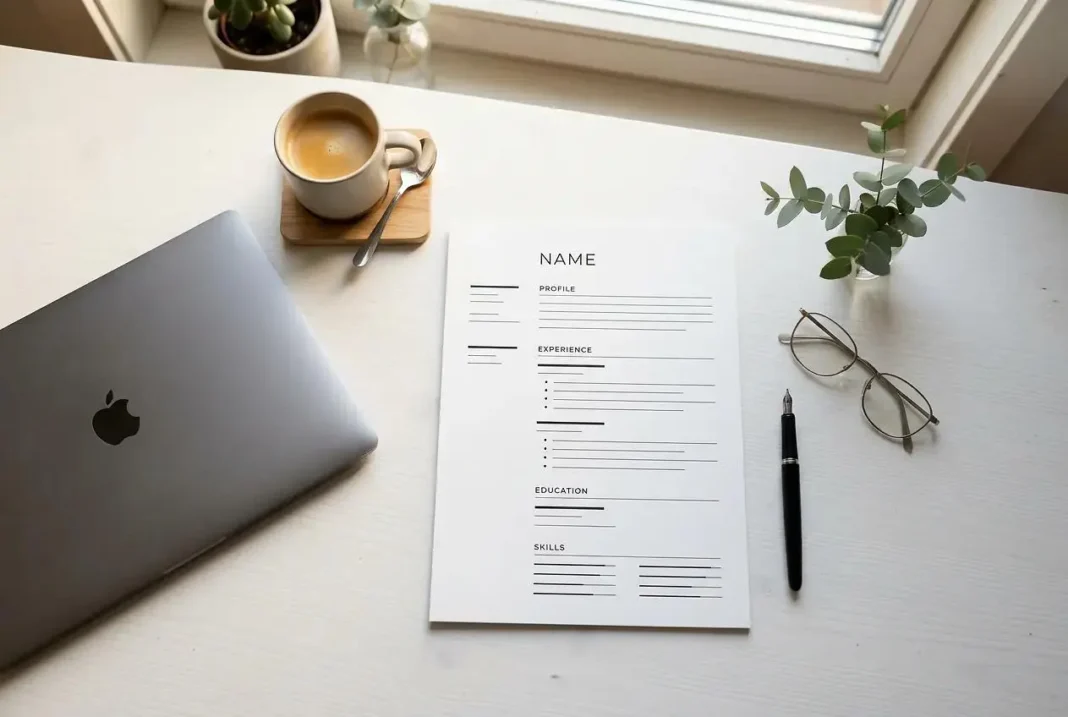
Write a CV: A Step-by-Step Guide for Job Seekers
A well-written CV helps employers understand your skills, experience, and suitability for a job. Whether you are applying for your first position, changing careers, or looking for a better oppor
tunity, your CV should make it easy for a recruiter to see what you can offer.
You do not need years of professional experience to create a strong CV. What matters is presenting your qualifications clearly, highlighting relevant skills, and adapting your application to the position you want.
In this guide, you will learn how to w
rite a CV step by step, what information to include, how to describe your experience, and which mistakes to avoid before submitting an application.
1. Understand What Employers Look for in a CV
Before writing your CV, read the job advertisement carefully. Identify the qualifications, skills, responsibilities, and experience the employer mentions
most often.
For example, a customer service position may require communication skills, patience, and the ability to resolve problems. An administrative position may place greater emphasis on organization, computer skills, and attention to detail.
Your CV should help the employer understand how your background relates to these requirements. You do not need to include every detail of your life. Focus on information that is relevant to the position.
2. Choose a Clear CV Format
For most job seekers, a simple, reverse-chronological CV is a practical starting point. This format presents your most recent experience first, followed by earlier positions.
A professional CV usually includes these sections:
– Contact information
– Professional summary or career objective
– Work experience
– Education and qualifications
– Skills
– Languages and relevant certifications, where applicable
Use clear headings, readable fonts, consistent spacing, and bullet points. Keep the layout simple enough for a recruiter to scan quickly.
For many early-career applicants, one page is sufficient. Candidates with substantial relevant experience may need two pages. The right length depends on your background and the requirements of the position.

3. Add Your Contact Information
Place your contact details near the top of the CV so employers can identify you and contact you easily.
Include:
– Your full name
– A professional email address
– Your phone number, including the country code if you are applying internationally
– Your city and country, when relevant
– A LinkedIn profile or professional portfolio, if it supports your application
Check every detail before submitting your CV. A typing mistake in your email address or phone number could make it difficult for an employer to reach you.
You generally do not need to include your full home address, national identification number, marital status, or other sensitive personal information unless a legitimate requirement applies.
Whether to include a photograph, date of birth, or other personal details depends on the country, industry, and employer’s application requirements. Check local expectations before deciding.
4. Write a Strong Professional Summary
A professional summary is a short introduction explaining your background, main strengths, and career focus. It usually appears directly below your contact information.
Avoid vague statements such as “I am hardworking and looking for any job.” Instead, describe relevant experience, skills, or training.
**Example for an experienced applicant:**
“Customer service professional with three years of experience handling customer inquiries, resolving complaints, and maintaining accurate records. Skilled in communication, problem-solving, and customer support.”
**Example for a recent graduate:**
“Recent business administration graduate with knowledge of Microsoft Office, data entry, and administrative support. Seeking an entry-level position to apply organizational skills and develop practical experience.”
Use these examples as models, not as statements to copy regardless of your background. Your summary should accurately reflect your own experience and abilities.
5. Describe Your Work Experience Effectively
Your work experience section should explain where you worked, what your responsibilities were, and what you contributed.
For each position, include:
– Job title
– Employer name
– Location, if relevant
– Employment dates
– A few bullet points describing responsibilities or achievements
List your most recent position first. Use clear action verbs such as organized, assisted, managed, prepared, maintained, coordinated, or improved when they accurately describe your work.
Instead of writing:
“Responsible for customer service.”
You could write:
“Responded to customer inquiries, explained product information, and helped resolve routine service issues.”
The second example gives a clearer picture of the work involved.
Where you have reliable figures, you can also describe measurable results. For example, you might mention the number of customers supported or reports prepared if you can substantiate those figures.
Never invent achievements, job titles, responsibilities, or employment dates. Honest and specific descriptions are more useful than exaggerated claims.
You can also improve your daily work routine by learning these simple habits that can boost your productivity at work every day
6. What If You Have No Work Experience?
If you are applying for your first job, you can still create a useful CV. Employers may consider education, relevant skills, training, volunteering, internships, academic projects, and other practical activities.
You could include:
**Education:** List your qualification, institution, and completion date or expected graduation date.
**Projects:** Describe relevant school, university, or personal projects and explain your contribution.
**Internships and Volunteering:** Include activities that demonstrate teamwork, communication, organization, or technical skills.
**Training:** Mention relevant courses or certifications you have completed.
For example, a recent graduate applying for an administrative assistant role could describe a university project that involved organizing information, preparing documents, and delivering work by a deadline.
Do not label an academic project as paid employment. Present each experience accurately and explain the skills it helped you develop.
7. Include Relevant Skills
Your skills section should focus on abilities that match the job advertisement.
Depending on the position, these may include:
– Communication and customer service
– Microsoft Word, Excel, or other relevant software
– Data entry and record keeping
– Project coordination
– Technical or industry-specific skills
– Foreign languages
– Problem-solving and teamwork
Distinguish between technical skills and interpersonal skills when that makes the information easier to understand.
Avoid listing skills you cannot demonstrate. If an employer asks about a skill during an interview, you should be able to explain how you have used it or what training you have received.
For language skills, describe your actual proficiency as accurately as possible. Do not claim fluency simply because you can hold a basic conversation.
## 8. Present Your Education and Certifications
Include your relevant educational qualifications, starting with the most recent.
For each qualification, provide the degree, diploma, certificate, or other credential; the institution; and the completion date or expected graduation date, where appropriate.
If you are a student or recent graduate, education may appear before work experience, especially when it is closely related to the position.
Include certifications that are relevant to the job. For example, an IT applicant might list a relevant technical certification, while a healthcare applicant might include an applicable professional qualification.
Make sure all qualifications and certifications are genuine and accurately described.
## 9. Adapt Your CV to Each Job Application
Sending the same CV to every employer may cause you to overlook important requirements.
Before applying, compare your CV with the job advertisement. Identify the most relevant skills and experiences, then make sure they are easy to find.
For example, if a job advertisement emphasizes inventory management and accurate record keeping, an applicant with relevant experience should highlight those responsibilities rather than focusing mainly on unrelated duties.
Use relevant terminology naturally. Do not fill your CV with repeated keywords or claim qualifications you do not have.
A tailored CV remains truthful while making the connection between your background and the position clearer.
## 10. Make Your CV Easy to Read and Applicant Tracking System Friendly
Some employers use applicant tracking systems (ATS) to collect, organize, or help review applications. A straightforward format can make your information easier for both software and people to interpret.
To improve readability:
– Use standard headings such as “Work Experience,” “Education,” and “Skills.”
– Choose a readable font and consistent formatting.
– Avoid placing essential information inside complicated graphics or decorative elements.
– Use bullet points instead of long blocks of text.
– Follow the employer’s requested file format.
– Check that your contact details and dates remain readable when the document is converted to PDF.
A simple, well-structured CV is often a safer choice than a heavily designed template. However, no format can guarantee that an applicant tracking system will rank or select your application.
## 11. Common CV Mistakes to Avoid
Before sending your CV, check for these common problems.
**Spelling and grammar errors:** Read the document carefully and use a spelling checker. Ask someone else to review it if possible.
**Unclear descriptions:** Replace vague statements with specific explanations of your responsibilities and relevant achievements.
**Irrelevant information:** Remove details that do not help demonstrate your suitability for the position.
**Exaggerated claims:** Describe your experience, qualifications, and language abilities honestly.
**Inconsistent dates:** Make sure employment dates, education dates, and job titles are accurate.
**Unprofessional contact details:** Use an email address suitable for job applications.
**Poor formatting:** Check margins, headings, font sizes, spacing, and page breaks.
**An incorrect file name:** Save your document with a clear name, such as `FirstName_LastName_CV.pdf`, if PDF is accepted by the employer.
Taking a few minutes to review these details can help you submit a more professional application.
## 12. A Simple CV Structure You Can Follow
Use the following outline when preparing your own CV.
**FULL NAME**
City, Country | Phone Number | Professional Email | LinkedIn or Portfolio, if relevant
**PROFESSIONAL SUMMARY**
Write two or three sentences describing your background, relevant strengths, and career objective.
**WORK EXPERIENCE**
Job Title — Employer Name
Location | Month Year – Month Year
– Describe a relevant responsibility or contribution.
– Explain another task or achievement.
– Include measurable results only when accurate and supportable.
**EDUCATION**
Qualification — Institution Name
Completion Year or Expected Graduation Date
**SKILLS**
– Relevant technical skill
– Relevant software or tool
– Communication or organizational skill
**CERTIFICATIONS AND LANGUAGES**
Add relevant certifications and accurately describe your language proficiency.
If you have no formal work experience, place education, projects, internships, or volunteering higher in the document when these sections better demonstrate your suitability.
## 13. Final CV Checklist Before Applying
Before sending your application, ask yourself:
– Does my CV match the job I am applying for?
– Are my contact details correct?
– Is my most relevant experience easy to find?
– Have I included the qualifications and skills that matter for the role?
– Are all dates, job titles, and achievements accurate?
– Have I checked spelling, grammar, and formatting?
– Have I followed the employer’s instructions for submitting the CV?
– Have I saved the file in the requested format?
If you can answer yes to these questions, your CV is in a better position to communicate your qualifications clearly.
## Frequently Asked Questions
### How long should a CV be?
For many entry-level applicants, one page is sufficient. Candidates with more extensive relevant experience may need two pages. Focus on useful information rather than reaching a particular length.
### Should I include a photo on my CV?
It depends on the country, industry, and employer. Some employers expect a photograph, while others prefer applications without one. Check the local requirements and instructions before including it.
### Can I write a CV without work experience?
Yes. You can highlight education, projects, internships, volunteering, relevant training, and skills that demonstrate your potential for the position.
### Should I send my CV as a PDF or Word document?
Follow the employer’s instructions. PDF can help preserve formatting, while some application systems or employers specifically request Word documents. If no format is specified, use a clean, readable file that opens correctly.
### How often should I update my CV?
Review your CV whenever you gain relevant experience, complete training, develop a new skill, or prepare to apply for a different type of position.
### What is the difference between a CV and a resume?
The terms are used differently across countries. In many contexts, a CV is a detailed record of education and experience, while a resume is usually a shorter document tailored to a specific job. Always follow the terminology and expectations used by the employer.
## Conclusion
A professional CV does not need complicated graphics or exaggerated language. It needs clear structure, accurate information, relevant skills, and examples that help employers understand what you can contribute.
Start with a simple format, tailor your CV to the position, and review every detail before submitting your application. These practical steps can help you present your background more effectively and approach your job search with greater confidence.
Explore more employment resources and career guidance on PourEmploi.com.